Architecture With Clear Boundaries
An editorial example about designing software that teams can understand, change, and operate with confidence.
This is sample editorial content. Replace it with Raheel’s final article before publication.
Boundaries are a communication tool
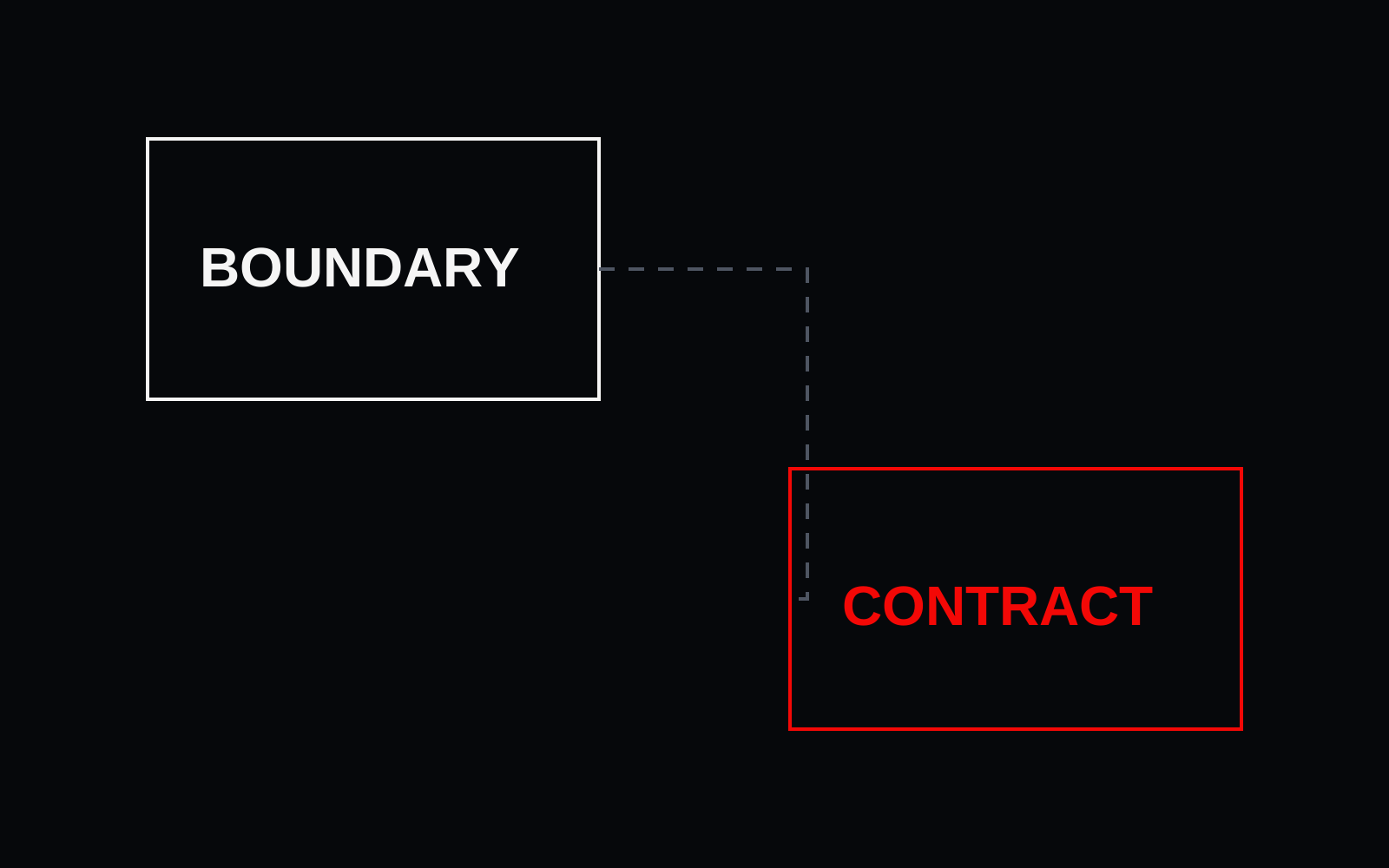
A useful boundary makes ownership, change, and failure easier to reason about. It gives a team language for discussing where a decision belongs and what must remain stable around it.
The best architecture is not the one with the most layers. It is the one that makes the next important change safer and easier to understand.
Start with the pressure points
Before selecting patterns, look for the places where the product changes most often, where teams repeatedly coordinate, and where failures are expensive. Those are the seams worth making explicit.
- Keep business rules close to the language of the problem.
- Make external dependencies visible at the edges.
- Prefer a few meaningful abstractions over many speculative ones.
- Treat observability and operability as design inputs.
Architecture should earn its complexity
Every new boundary carries a cost. The practical question is whether that cost buys independent change, clearer ownership, better resilience, or a simpler mental model. If it does not, the boundary may be ceremony rather than design.